
Blog
Is Your Smartphone Worth Repairing In 2026?


It starts the same way every time. A moment of distraction. A slippery hand. The phone leaves your grip in what feels like slow motion, and the resulting impact on pavement, tile, or — in a particularly cruel twist of fate — a ceramic sink, produces that sound. The one you know immediately is expensive. The spiderweb crack spreads across the screen and you stare at it, working through the same mental arithmetic that millions of UK smartphone owners face every single year: repair it, or replace it?
The answer, in the vast majority of cases, is repair. But the answer comes with conditions — about where you take it, what parts go into it, and what protections cover the work once it’s done. This blog covers all of it: the real cost of smartphone repairs in the UK in 2026, how long your phone is actually built to last, what the law now says about your right to have it fixed, and why the cheapest option at the counter is not always the one that saves you money in the long run.
The scale of the UK repair market — and why it matters
Let’s start with the numbers, because they put the conversation in its proper context. The UK mobile phone repair industry is worth £689.1 million in 2026, according to IBISWorld — a figure generated by over 636 registered businesses employing thousands of skilled technicians across the country. Around 70% of global mobile users have experienced a battery or screen-related issue with their device, according to Business Research Insights. These are not niche events. A cracked screen or a failing battery is, statistically, a near-universal experience for anyone who owns a smartphone.
That upgrade cycle figure — 3.84 years, up from 3.16 years in 2020 — is telling. UK consumers are holding onto their phones for longer than ever before. According to SellCell’s 2025 UK survey, the share of people replacing every one to two years has dropped from 20% in 2023 to 17% in 2025. People are making their devices last. And when something goes wrong, more of them are choosing repair over replacement — not just because it’s cheaper in the moment, but because it makes financial sense across the full lifespan of the device.

How long does a smartphone actually last?
This is the question that should anchor every repair-versus-replace decision, and the honest answer is considerably more encouraging than most people assume. Physically, a well-maintained smartphone is capable of lasting anywhere from five to eight years. The most well-supported flagship models — with careful use and a timely battery replacement along the way — can exceed a decade of functional life.
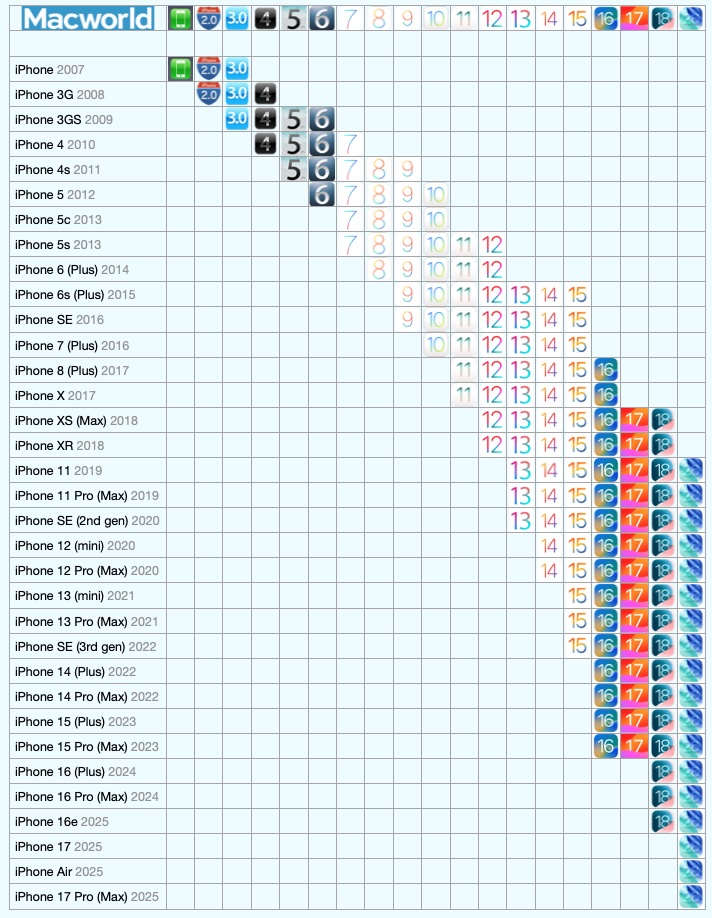
The practical limiting factor is software support, not hardware failure. According to RefurbMe’s 2026 lifespan analysis, the major manufacturers now offer the following support commitments for their flagship devices:
iOS software support
- iPhone 15 and later: minimum 5 years of updates
- iPhone 17 (2025): supported through 2032
- Physical hardware typically exceeds this
- Battery the most likely single-point failure
- A replacement battery extends useful life by 2–4 years
Android software support
- Galaxy S24 and later: 7 years of OS and security updates
- Longest Android support commitment ever offered
- AMOLED panels: typically very durable
- Battery degrades faster than Apple equivalent
- Mid-range models: often 2–3 years of support only
Android software support
- Pixel 8 and later: 7 years of OS and security updates
- Excellent value for long-term ownership
- Growing repair parts availability in UK
- iFixit partnership improving access
- Strong case for repair given longevity commitment
The implication is clear. If your iPhone 15 Pro screen cracks in 2026, you have up to six more years of full software support ahead of you. Replacing a £999+ device because of a screen fault — one that can be resolved by a competent repair shop — is, in the vast majority of cases, an unnecessary and expensive decision. The RepairScore EU 2026 guide puts it plainly: the average smartphone is physically capable of lasting five to eight years. Most people replace theirs in under four. The gap between those two figures is where repair shops exist.
“The question isn’t how long a phone lasts before it breaks. It’s how long it stays usable before software support runs out or a repair becomes uneconomical. For most UK owners in 2026, that threshold is much further away than they think.”
What repairs actually cost in the UK in 2026 — the full breakdown
Here is where the conversation gets specific. Repair pricing in the UK varies by model, display technology, parts quality, and provider — but the data gives us clear ranges to work with. The average cost of a screen replacement across all popular smartphone models in the UK is approximately £215 in 2026, according to PhoneMend’s 2026 pricing data. That average, however, conceals a wide range.
UK price ranges — 2026
- Budget / older Android: £60 – £100
- iPhone (12/13 series): £120 – £240
- iPhone (14/15 non-Pro): £200 – £320
- iPhone Pro / Pro Max: £279 – £389+
- Samsung Galaxy S-series: £150 – £350
- Samsung foldables: £350 – £485+
- Google Pixel (recent): £150 – £280
UK price ranges — 2026
- Budget / mid-range phones: £30 – £50
- iPhone (most models): £65 – £95
- Samsung Galaxy S-series: £50 – £110
- Google Pixel: £50 – £80
- Typical turnaround: 20–40 minutes
- Most impactful single repair for daily use
UK price ranges — 2026
- Charging port (simple): £40 – £80
- Charging port (with soldering): £80 – £150
- Camera module: £60 – £180
- Water damage inspection & clean: £50 – £150
- Severe water damage: £150 – £300+
- Speaker / microphone: £40 – £100
Sources for the above ranges include Buy2Fix’s 2026 UK repair cost breakdown, GadgetsNRepair’s 2026 screen repair guide, and Galaxy Techno’s 2026 UK pricing analysis.
One figure worth dwelling on: authorised service centres — Apple Stores, Samsung-authorised repairers — typically charge 40–60% more than independent specialists for identical work, according to Buy2Fix. The part going into your phone is the same. The labour required is the same. The premium is for the brand on the door. A reputable independent shop with certified technicians, quality parts, and a warranty on the work is not a lesser option. In many cases, it is the smarter one.
A note on parts quality: Not all replacement screens or batteries are equal. OEM (original equipment manufacturer) parts typically cost 2–3× more than aftermarket alternatives but carry manufacturer backing and perform to the original specification. If you’re repairing a flagship device you intend to keep for several more years, investing in quality parts now prevents repeat repairs later — and protects resale value.
The repair-versus-replace calculation — run the numbers
The decision comes down to one ratio: repair cost versus current device value. As a general rule, if the repair cost is less than 50% of the phone’s current market value, repair is almost always the right call. If it exceeds that threshold — or if the device has multiple concurrent faults — replacement becomes worth serious consideration.
Let’s run a real example. An iPhone 15 Pro Max retails new at around £1,199. Its current second-hand value in good condition sits around £650–£750. A screen repair at a reputable independent shop costs approximately £279–£349. That is roughly 40–50% of resale value, and a fraction of a new device. The same logic applies to a Samsung Galaxy S25 Ultra: retail £1,249, second-hand value approximately £600–£700, screen repair at an independent shop £200–£280. Repair wins, comprehensively.
Strong case for repair
- Repair cost is under 50% of device resale value
- The phone has 2+ years of software support remaining
- Only one or two faults need addressing
- The device is a flagship with good resale value
- You want to avoid a new contract or upfront cost
- Sustainability matters to your purchasing decisions
Replacement may be better
- Repair cost approaches or exceeds resale value
- Software support has already ended or expires soon
- Multiple components need repair simultaneously
- The device is an older budget model with low resale value
- Severe motherboard or water damage is confirmed
- Performance has degraded beyond what repair can address
Even when you decide to replace, the argument for repairing first — then selling — is underestimated. A cracked-screen iPhone in good working order sells for significantly less than one with an intact display. A £200 screen repair on a device that then sells for £150 more on the used market is not a loss: it’s the cost of protecting your trade-in or resale value while you transition.
Battery replacements — the most underrated repair in the UK
If there is a single repair that the most people put off for the longest time, to the greatest detriment, it is the battery replacement. Lithium-ion batteries degrade with every charge cycle. Most smartphone batteries are rated for approximately 500 charge cycles before they fall below 80% of their original capacity — a threshold that, under new EU Ecodesign rules effective from 2025, manufacturers must now meet as a minimum for devices sold in Europe, according to Secondary Market News.
At typical usage of one full charge per day, 500 cycles is roughly 16–17 months. Many phones reach 80% battery health around the 2–3 year mark, at which point the degradation becomes noticeable in daily use — shorter days, slower performance on processor-intensive tasks, unexpected shutdowns in cold weather. The fix costs between £30 and £95 depending on the model. It takes less than an hour. And it effectively resets your phone’s daily performance to near-new levels. It is, per pound spent, one of the most impactful repairs available.
How to check your iPhone battery health: Go to Settings → Battery → Battery Health & Charging. If your Maximum Capacity is below 80%, a replacement will make a noticeable difference to daily performance and battery life. For Android devices, Samsung’s built-in battery diagnostics can be accessed through the Device Care settings.
Extended warranties and right-to-repair initiatives have also contributed to device longevity. According to SQ Magazine’s 2026 smartphone statistics report, such initiatives have boosted average device lifespans by an average of 24 months. A battery replacement, timed well, is often the single repair that delivers that additional two years.
Your legal rights — what the UK and EU Right to Repair means for you
The legal landscape around smartphone repair has shifted meaningfully in the last twelve months, and it is worth understanding what your rights now are. Since 20 June 2025, new EU Ecodesign regulations for smartphones and tablets came into force, requiring manufacturers to supply spare parts to professional repairers for seven years after a model’s release, provide at least five years of software updates after a model is withdrawn from the market, and make repair manuals and diagnostic tools available to independent repair businesses. New devices must also survive 45 drop tests and batteries must retain 80% capacity after 800 charging cycles. These requirements apply to devices sold in the EU market.
The UK, post-Brexit, is not bound by EU directives — but its own Ecodesign and Energy Labelling Regulations, updated in 2025, brought equivalent obligations for smartphones into UK law. As RepairMyPhone’s 2025 consumer guide explains, UK legislation now mandates that smartphone manufacturers provide repair manuals, diagnostic tools, and genuine replacement parts to authorised independent repair shops. The practical consequence: independent shops now have a legal route to genuine parts access that previously existed only for manufacturers’ own service networks.
Your UK Consumer Rights in brief: When you buy a repair from a retailer (not a private individual), UK Consumer Rights Act 2015 protections apply in full. The service must be performed with reasonable care and skill. If the repair fails to fix the problem, you are entitled to a repeat repair or a price reduction. A reputable shop offering a written warranty gives you contractual protection on top of your statutory rights.
The EU Right to Repair Directive also requires full transposition into national law across all EU member states by 31 July 2026, according to Cybernews. This will require manufacturers to repair devices within a reasonable timeframe, refrain from using software or hardware techniques to obstruct independent repairs, and be transparent about repair services. The direction of travel is clear: the era of manufacturers using deliberate complexity to funnel consumers toward expensive official repair channels — or replacement — is being legislated against. For UK consumers, that means more choice, more competition, and lower prices over time.

Independent vs. manufacturer repairs — what you’re actually choosing between
When your screen cracks, you have three routes: the manufacturer’s own service (Apple Store, Samsung-authorised centre), a third-party independent shop, or a postal repair service. Each has distinct trade-offs.
Manufacturer routes offer the certainty of genuine parts and Apple’s or Samsung’s own calibration processes — but they charge accordingly, they may require appointments days or weeks in advance, and the turnaround can leave you without your device for several days. As GadgetsNRepair’s 2026 guide notes, manufacturer services often involve booking, shipping, or waiting — inconveniences that matter considerably when your phone is your primary communication device, navigation tool, payment method, and camera.
Reputable independent shops typically offer same-day turnaround — most screen repairs take under an hour once the parts are to hand — at 30–50% lower cost for equivalent quality work. The key phrase is reputable. A shop with no warranty, unknown parts sourcing, and no identifiable technician credentials is not a saving. It is a gamble. A shop with certified technicians, a clear parts policy, and a written warranty on the work is a professional service that happens to cost less than the manufacturer equivalent. Those are very different things, and it is worth taking five minutes to verify which one you are walking into.
“68% of UK smartphone users prefer local repair shops over carrier or manufacturer services. 45% cite cost savings as their primary reason — but the data also shows that same-day turnaround and personal service are significant factors. Speed and accountability matter as much as price.”
The 12-month warranty — why it changes the equation entirely
A repair without a warranty is a transaction with no accountability attached. If the replacement screen develops a fault a month after fitting, if the battery you paid to have replaced fails at six months, if the charging port repair holds for three weeks and then gives out — without a warranty, your options are limited to goodwill from a shop that has no obligation to help you.
A 12-month warranty on a repair is not a marketing gesture. It is a documented, enforceable commitment that sits alongside your UK statutory consumer rights. It means that if the repaired component fails through no fault of your own within the warranty period, you have a contractual right to have it addressed. At TF2 Smartphone Solutions, every non-cosmetic repair we carry out comes with a 12-month shop warranty on parts and labour, excluding accidental damage. That covers screens, batteries, charging ports, cameras, speakers — if we fit it and it fails within the year, we stand behind the work. Our repair pricing is available on our website before you walk through the door. No surprises. No ambiguity.
Always ask before you hand over your phone: Does the shop offer a written warranty? What parts are being used — OEM, genuine used, or aftermarket? How long will the repair take? These three questions separate professional shops from those who will take your money and your phone and leave you with limited recourse if something goes wrong.
The sustainability argument — why repair is the right choice beyond the wallet
The financial case for repair is compelling enough on its own. But the environmental case adds weight that is worth acknowledging. According to Optima Design’s Right to Repair analysis, approximately 5.3 billion mobile phones dropped out of use globally in 2022 — creating an enormous volume of electronic waste containing rare earth metals, lithium, and materials that are both environmentally hazardous and resource-intensive to produce. Manufacturing a new smartphone has a significant carbon footprint that dwarfs the environmental cost of repairing one. Every repaired device is one fewer device in the waste stream. In 2026, with sustainability moving from a values statement to a legislative requirement, that matters — and it is increasingly reflected in the buying choices of UK consumers.
The bottom line — what to do when your phone breaks
Your phone breaks. Here is what to do. First, assess the fault honestly: is it one issue, or several? Second, check your battery health if you haven’t recently — a failing battery can masquerade as a performance problem and is one of the cheapest repairs available. Third, look up the current resale value of your device and compare it to the repair cost. If repair is under 50% of resale value and you have more than two years of software support remaining, repair almost certainly makes more sense than replacement. Fourth, choose your repairer carefully — ask about parts quality, turnaround time, and warranty before committing. Fifth, get the warranty in writing.
The UK smartphone repair industry exists because the maths makes sense. A £1,000+ device with a cracked screen is not a write-off. It is a device that needs a repair. One that, done properly, by a shop that knows what it is doing and stands behind its work, will give you several more years of reliable daily use. That is what repair shops are for. That is what we are for.
Professional repairs. Transparent pricing. 12-month warranty on every job.
We repair iPhones, Samsung Galaxy phones, Google Pixels, and more — with quality parts, certified technicians, and a 12-month shop warranty on every non-cosmetic repair covering parts and labour (excluding accidental damage). Our prices are on our website. Bring it in and we’ll sort it.
IBISWorld — Mobile Phone Repair in the UK, 2026
Business Research Insights — Smartphone Repair Market 2026
SellCell — How Often Do People Upgrade Their Phone? (2026)
PhoneMend — Mobile Phone Repair Prices UK 2026
Buy2Fix — Cost of Phone Repairs UK 2026
GadgetsNRepair — Phone Screen Repair Cost UK 2026
Galaxy Techno — Phone Screen Repair Cost UK 2026
FoneWorld Hove — Cracked Screen Repair Costs UK 2025
RepairScore — How Long Do Smartphones Last? 2026
RefurbMe — How Long Does a Smartphone Last? 2026
SQ Magazine — Smartphone Statistics 2026
Secondary Market News — EU Smartphone Repairability Rules, June 2025
Cybernews — EU Right to Repair Directive 2026
RepairMyPhone — Right to Repair in 2025: UK Consumer Guide
Optima Design — Right to Repair Legislation Analysis
Gitnux — Smartphone Repair Industry Statistics 2026